
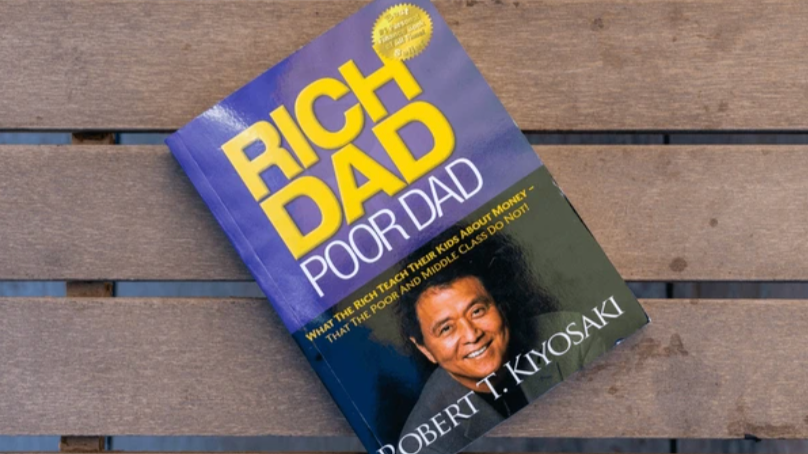
Rich Dad Poor Dad is full of smart ideas: don’t depend on salary alone, buy assets not liabilities, start a business, let your money work for you. Solid stuff… in theory. But this book was written in a country where things actually work. In Nigeria, these rules sound more like motivational comedy.
1. “Buy assets, not liabilities”
But people are still begging 'NEPA' to bring light.
The book says, “Don’t buy things that take money out of your pocket.” Great advice. But how do you buy anything when money enters your pocket on Monday and disappears by Wednesday? Minimum wage is around ₦70,000 but a bag of rice is ₦80,000. Petrol is over ₦700 per litre. Even Indomie of all foods has stopped being humble. Forget assets. Most people are trying not to be liabilities to their own lives.
2. “School doesn’t make you rich”
But in Nigeria, it’s still Plan A, B, and C.
Kiyosaki says formal education won’t make you wealthy. He’s not wrong. But here, school is still one of the few ladders people have even if that ladder is leaning on a broken wall.
Youth unemployment is officially 5% as of 2024. That number sounds neat until you realize it’s based on a new way of measuring. It doesn’t count underemployed people or those who’ve simply stopped trying. In real life, the struggle is visible.
Thousands of first-class students are still home, watching their phone screens like it’s a miracle portal. One graduate said her ₦250,000 award was the only income she’s ever earned. After the handshake and the photo, it was straight back to job hunting and prayer.
3. “Start a business”
Solid idea. But have you tried running a business in Nigeria?
The book encourages entrepreneurship. Nigerians don’t need that push. Everyone is already selling something. Even the person telling you to read the book is selling you a course.
But the actual cost of starting a legit business? Let’s do the math:
- Shop rent: ₦600k–₦1M/year
- Generator: ₦300k
- Tools and setup: ₦150k+
- Fuel, signage, ‘mobilisation’ fees (You have to settle people you don't even know)
- Random local charges: unlimited
Then comes the real game: constant power cuts, unstable prices, random levies from people with laminated ID cards and no uniform. And don’t forget one classic Nigerian business risk: If it rains too much, customers won’t come. If it’s too sunny, same thing.
4. “Don’t be afraid to fail”
Easy to say when you have a rich uncle.
The book says failure is part of the journey. True. But in Nigeria, failure can finish your career before it starts. If your small business flops, people don’t say “He’s learning.” They say “He’s confused.” Have you seen people advising a poor man? They make it feel like they are advising a stupid person with no brain cells.
Worse, you may still be paying off the loan two years later, and everyone you owe money will suddenly become motivational speakers on WhatsApp - “Start small, Think big.”
And if your surname doesn’t carry weight? You might recover in 5 years or maybe No second chance for you. Hopefully you win the lottery or something. But if your surname rings bells, you can fail five times and still be given front row at an investor pitch.
5. It’s not just about money. Family will humble you
Even if you’re lucky enough to make some money, remember: you’re not spending it alone. Black Tax says hiiii. Uncle needs help with rent. Cousin needs help with school. Your younger brother’s friend’s sister just gave birth and somehow you’re expected to contribute.
You can’t exactly say no. If you do, you’re now proud. Or worse, they’ll say you joined a cult. Then there’s trust. I was surprised to find out Nigerians don’t put money in banks not because they don’t know how to save, but because their last savings account disappeared during one mysterious bank merger in 2006.
But what might actually work here?
Let’s stop pretending American advice is copy-paste ready. Some local things are already helping:
• Ajo, Esusu, Adashi
These rotating savings groups work. They’re built on trust. A friend of mine used esusu to buy her first baking oven. No loan officer, no guarantor, just community support. If formal systems supported them with tech and some protection, they could scale without losing that trust.
• Micro business loans that don’t ruin lives
Low-interest, small business loans that don’t require your grandfather’s land as collateral could go a long way.
• Local financial advice
No, you don’t need to buy crypto or real estate right now. Just learning how to budget, avoid lifestyle pressure, and save ₦1,000 per week without ‘village people’ finding out is progress.
• Honest talk about family pressure
Workshops or even TikToks that help people set boundaries without becoming outcasts would be helpful. Maybe call it “How to say no without starting family meeting.”
In conclusion...
Rich Dad Poor Dad is a smart book. But it was written for a place with working systems and safety nets.
In Nigeria, people are trying. They’re reading. They’re building. But they’re doing it with bad roads, no power, and a generator that drinks more fuel than sense. Until the system starts backing effort with real opportunity, advice from abroad will keep sounding like stand-up comedy in a room full of tired people.
Let’s build a better system here, at least in my lifetime. One that matches our hustle, respects our struggle, and gives room for people to try without fear of crashing.
That’s the kind of financial freedom that matters.
Was this article helpful?